We may receive a commission when you use our affiliate links. However, this does not impact our recommendations.

One of the regulars at the Melbourne Guild of Fine Woodworking is building a workbench using Richard Maguire hardware from the United Kingdom. During my visit there, I had the chance to inspect the hardware straight from the box.
I got to play with three pieces of bench hardware, all of which were very nice.

The Maguire Single Wooden Screw is similar in quality to the high-quality screws being made in the United States now. The Maguire screw is in beech that has been soaked in linseed oil. The hub is fancier than the ones made in the United States, and the turning is crisp. The screw, of course, moves smoothly and quickly as it should.
The only nit I’ll pick with the screw is in the handle. The caps on the handle are glued on by the user. I have yet to find any that will hold this way. The only solution that really works (in my experience) has been the threaded caps from Lake Erie Toolworks.

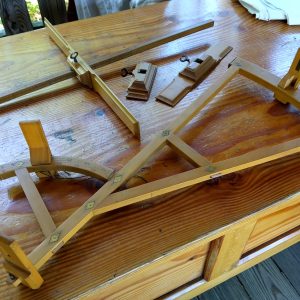
The Maguire Wagon Vice, as you can see, has some similarities to the Benchcrafted tail vise. But it also has some significant differences. The metal carrier for the dog block moves back and forth on round rails instead of square slots. In looking at the installation instructions for the Maguire, I think this assembly makes it easier to install – though I won’t know for sure until I try it myself.
The handle is a nice bronze-color crank. The center pin has nicely peened hammer marks. A nice touch.


The most fascinating piece of hardware is the Maguire Pinless Leg Vice, which is quite a bit of precision engineering. This hardware replaces the parallel guide in a leg vise. The post is piston fit into a long shaft embedded in the leg. (The shaft is amazingly embedded with bearings.) When the chop of the leg vise encounters your work, it automatically locks the shaft in place. Very clever. Check out the video on the Maguire website.
All in all, the hardware is very well made and impressive all around.
— Christopher Schwarz
I’ve written about traditional workbenches on this blog continuously since 2005. You can read, well, everything by starting here.
If you want it boiled down a bit, try my first book “Workbenches: From Design & Theory to Construction & Use.” I’m also quite prod of the DVD “Build an 18th-century Workbench.”