We may receive a commission when you use our affiliate links. However, this does not impact our recommendations.

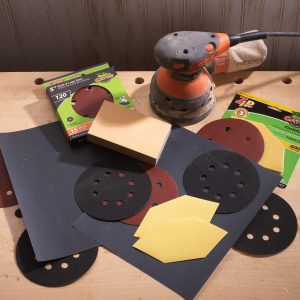
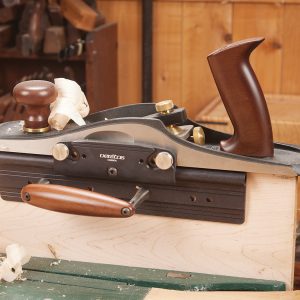
Harbor Freight brand Chicago Electric sander, and my No. 102 Lie-Nielsen Iron block plane, which is unfortunately discontinued. These days Lie-Nielsen is offering only the bronze version.
I prefer working with hand tools as much as I can. I find them much quieter, safer and more fulfilling than machines. I believe that only when using a hand tool can one become intimate with the essence of woodworking — sensing wood’s density, manipulating its grain, listening to its whispering sound when layers of shavings are carefully peeled off under the sharp edge of a handplane.
Don’t get me wrong, I could not succeed in my line of woodworking without the assistance of machines, yet planes, chisels and handsaws are more dear to my heart, hand and yes…my pocket. When I build my cutting boards, I rely on stationery tools to mill, cut to size, groove and drill my design. But I also find that there are cases when a handplane is indispensable for surfacing boards with capricious grain or for chamfering corners. With a small block plane I can chamfer the corner of the boards fast and efficiently, and because I like to use my planes, there is no reason to set up the router table with a 45° router bit to do the same job with more noise. Furthermore, a sharp top-notch block plane will allow you to cut with the grain in almost every grain configuration, whereas a router table setup might not.
While I feel reverence for most of my hand tools, and I acknowledge the indispensable contribution of the big electrical helpers for rapid manipulation of wood, I feel quite indifferent when approaching the dusty realm of sanding. I have no passion for sanding and no fetish toward the tools that I use.
My approach is boring and utilitarian: I wish to pay the least for the tool that will last the longest time without falling apart. I learned from experience that even tools that carry the hallmark of fancy brands may only last just a few months of intensive sanding work, so it just doesn’t make any sense to buy them when you have a cheap alternative at half the cost.
This is why I bought my Harbor Freight orbital sander. The tool is so cheap that even if it falls apart in half the time that say a DeWalt sander will, it will still be cost-effective. The only thing that bothered me was that once this tool met its maker (unfortunately most of our cheap electric tools these days are impossible or impractical to maintain) I would be responsible for yet another blob of plastics and metal parts that ends up in the landfill (yes I am that kind of a guy who cares for my environmental footprint). However, my initial trepidation had gradually subsided the longer I used this sander. After two years of routine use, though not “industrial” use, I can say that the sander has paid for itself a few times. It is still going strong and except for its inadequate dust-collecting bag (which is why if the weather is good I prefer sanding outside), it does its job probably as well as any top-notch brands out there.
While I don’t anticipate any major change in my attitude toward sanding, there is always the possibility that sometime down the road things will change, perhaps I might even meet “the right tool” that will scratch my heart. Do I hear a Festool whispering in my ear?

I use the No .102 (and other handplanes) for chamfering my boards’ corners. The inexpensive Harbor Freight random-orbit sander is very handy for surface sanding. The only problem with its design is the dust-collection system.
 It doesn’t matter which brand of table saw you use, you need to know how to perform maintenance and use it properly. Check out “Power Tool Essentials: The Table Saw” at shopwoodworking.com.
Here are some supplies and tools we find essential in our everyday work around the shop. We may receive a commission from sales referred by our links; however, we have carefully selected these products for their usefulness and quality.