


Our content is meticulously curated through independent research, testing, reviews, and AI-driven recommendations, all designed to present you with the finest product choices. We may receive a commission when you use our affiliate links. However, this does not impact our recommendations.
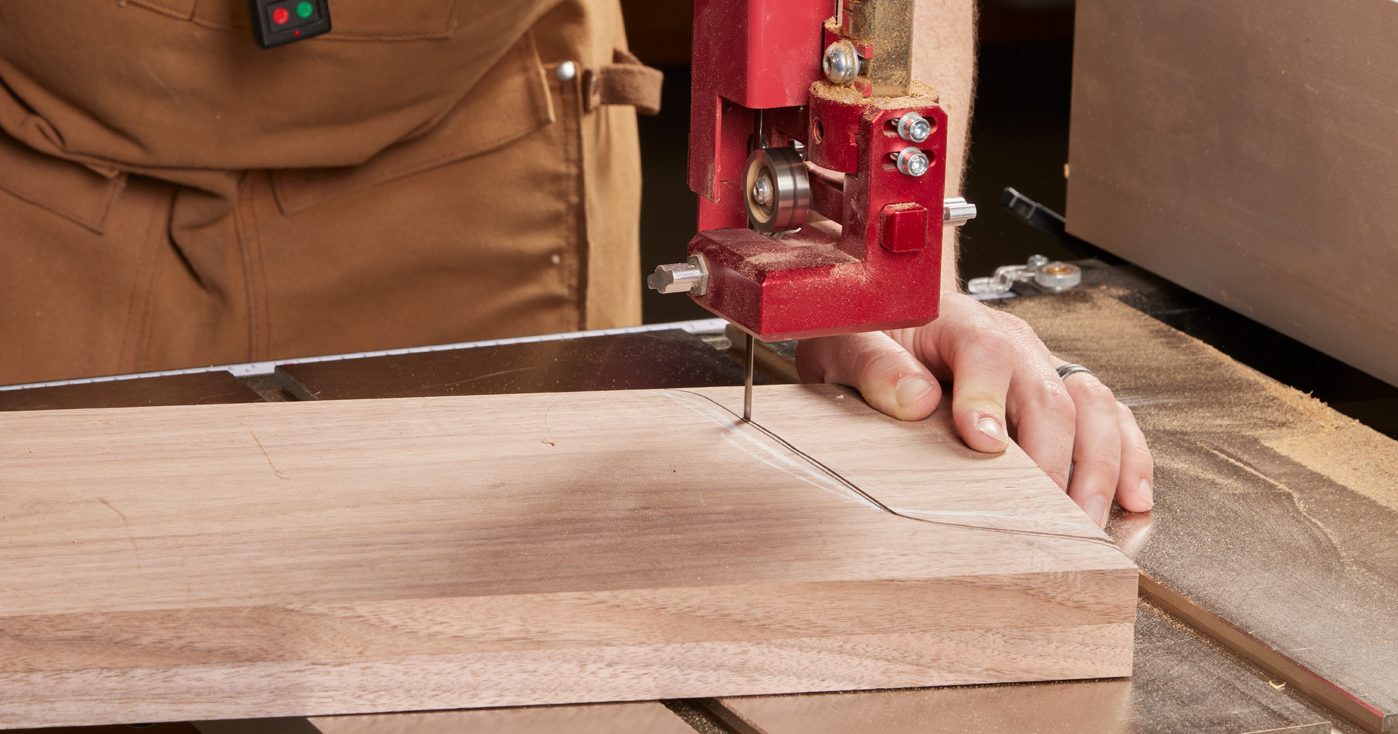
We've tested a lot of band saws over the years at Popular Woodworking. We look at factors like performance, material versatility, and price, narrowing them down to our top choices that are easily available on Amazon.
Choosing the right tools can seem overwhelming if you're a first-time woodworker, especially a band saw. And if you're a seasoned woodworker, trying out new equipment when you're used to your usual tools can be daunting. Band saws are versatile cutting tools that let you make intricate cuts and smooth finishes, allowing you to cut through various materials easily. There is a reason why many woodworkers think the most important tool in the shop is the band saw. Find the right one and you will too!
Our Top Picks
- Reader's Pick Basic Band Saw:WEN 9-Inch Band SawShop Now ➔
- Reader's Pick 10" band saw:RIKON Power Tools 10-3061 10" Deluxe BandsawShop Now ➔
- Reader's Pick 14" Band Saw:Jet 14-Inch Woodworking BandsawShop Now ➔
- Reader's pick 14" band saw #2:RIKON 10-326 14" Deluxe BandsawShop Now ➔
- Reader's Pick 18" band saw:Powermatic ArmorGlide 18-Inch Woodworking BandsawShop Now ➔
The Best Band Saws
Reader's Pick Basic Band Saw: WEN 9-Inch Band Saw
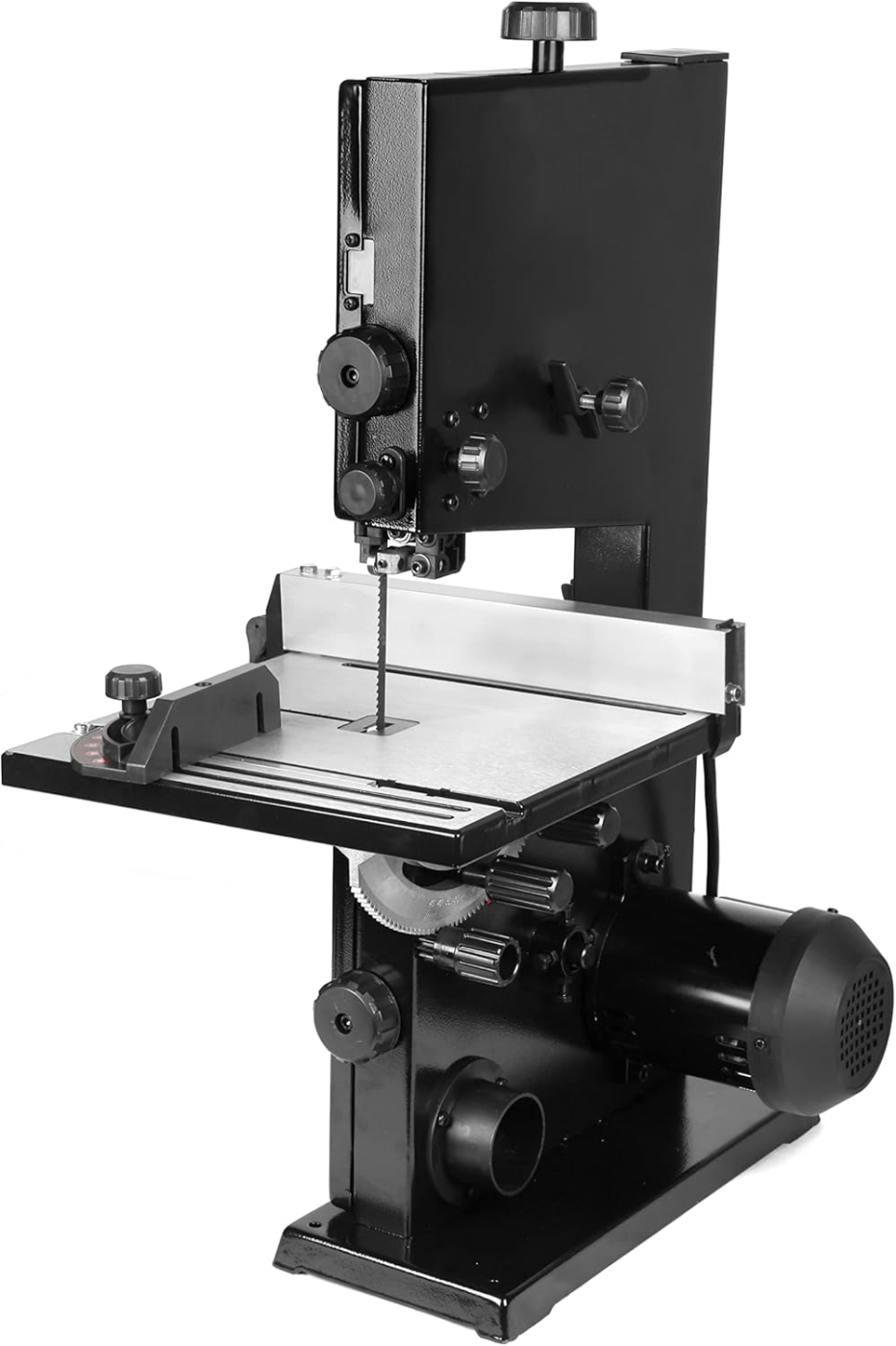
If you're on a tight budget and looking for a band saw without the bells and whistles, this 9-inch benchtop model from WEN is a solid entry point. The WEN 9-Inch Band Saw can cut up to 3-1/2 inches deep and 9 inches wide, with a blade that rotates up to 2500 RPM. The saw also includes a rip fence, miter gauge, and an adjustable blade guard with ball-bearing supports. More specifications: 2.8-amp motor rotates 59-1/2-inch blades, dimensions 11"L x 7"W x 4"H with 12-1/4 x 11-7/8-inch work table, bevel capability up to 45 degrees, 1/4-inch-wide blade, 2-1/2-inch dust port, 120 Volts, 40 Pounds, 336 watts, AC power source
Pros
- Bevel capability
- Uses relatively common 59-1/2-inch blades
- 2 year warranty
Cons
- Lacks the power and finesse of other models
Reader's Pick 10" band saw: RIKON Power Tools 10-3061 10" Deluxe Bandsaw
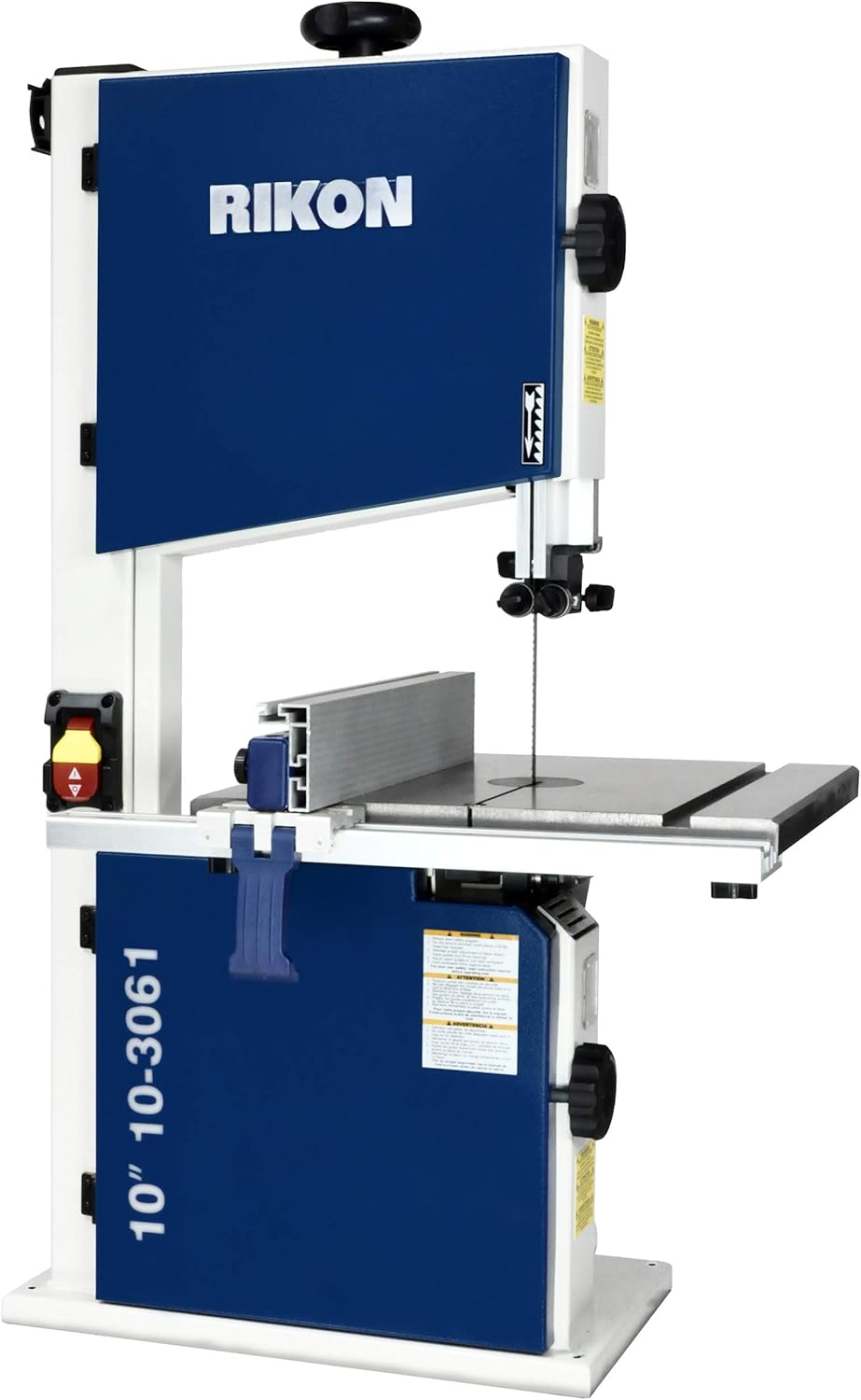
If you're looking for a benchtop band saw that can do it all, look no further. For a large contingent of woodworkers, this is all the saw you'll need, and it has plenty of power to tackle anything from craft work to chairmaking and more. The RIKON Power Tools 10-3061 10" Deluxe Bandsaw cuts up to 3-1/2 inches deep and 9 inches wide, with a blade that rotates up to 2500 RPM. The saw includes one 5.5Amp 110V (60Hz) motor, a table 13-3/4 x 12-1/, one fence 12-1/4 x 2-3/8, one dust port 2-1/2 OD 2-1/4 ID. More specifications: dimensions 34-1/4 H x 21 W x 16-1/4 D with 15-7/8 W x 9-3/8 D base, table can tilt 5 degrees left 45 degrees right, 110 Volts, 1720 RPM, 79.8 pounds, corded electric power source, requires 1 lithium Ion battery
Pros
- Two blade speeds
- Easy set tension arm
- Recommended for wood, plastic, and metal
Cons
- Some report the fence is finicky.
- Less resaw capability than more powerful saws.
Reader's Pick 14" Band Saw: Jet 14-Inch Woodworking Bandsaw
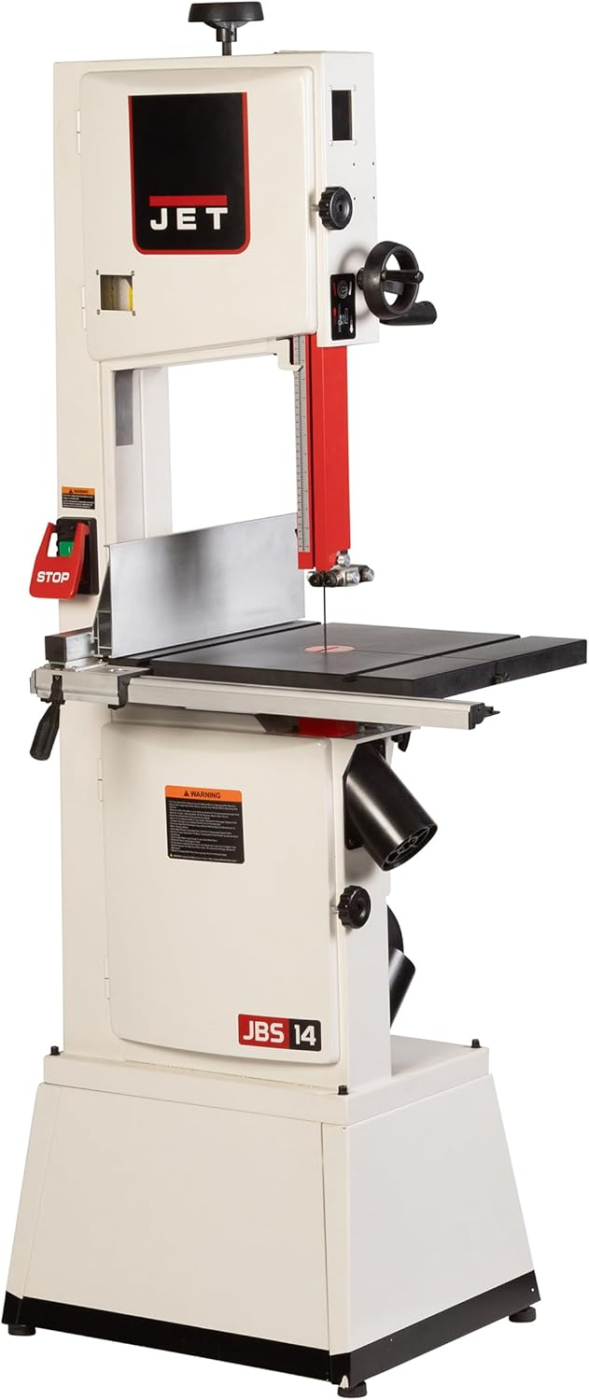
If you're looking for the type of band saw that can replace a table saw in your shop, this is where you should be looking. 14" saws have greater resaw capability and power than their smaller cousins, though they take up considerably more space. The Jet 14-Inch Woodworking Bandsaw has adjustable upper and lower ball bearing guides as well as a fence with measurements to set up the perfect cut. The saw comes with a stand, fence, four rubber feet, hardware, five wrenches. Blade is not included. More specifications: dimensions 37"L x 27.5"W x 75.38"H, 115 Volts, 272 Pounds, 1720 RPM, 20 Amps, 45 degree angle for cutting, power source corded electric
Pros
- Powerful 1-3/4 HP motor
- Low friction, cast iron surface resists corrosion
- More than 13-inches of resaw capacity
- Two-height fence
Cons
- Blade not included
Reader's pick 14" band saw #2: RIKON 10-326 14" Deluxe Bandsaw
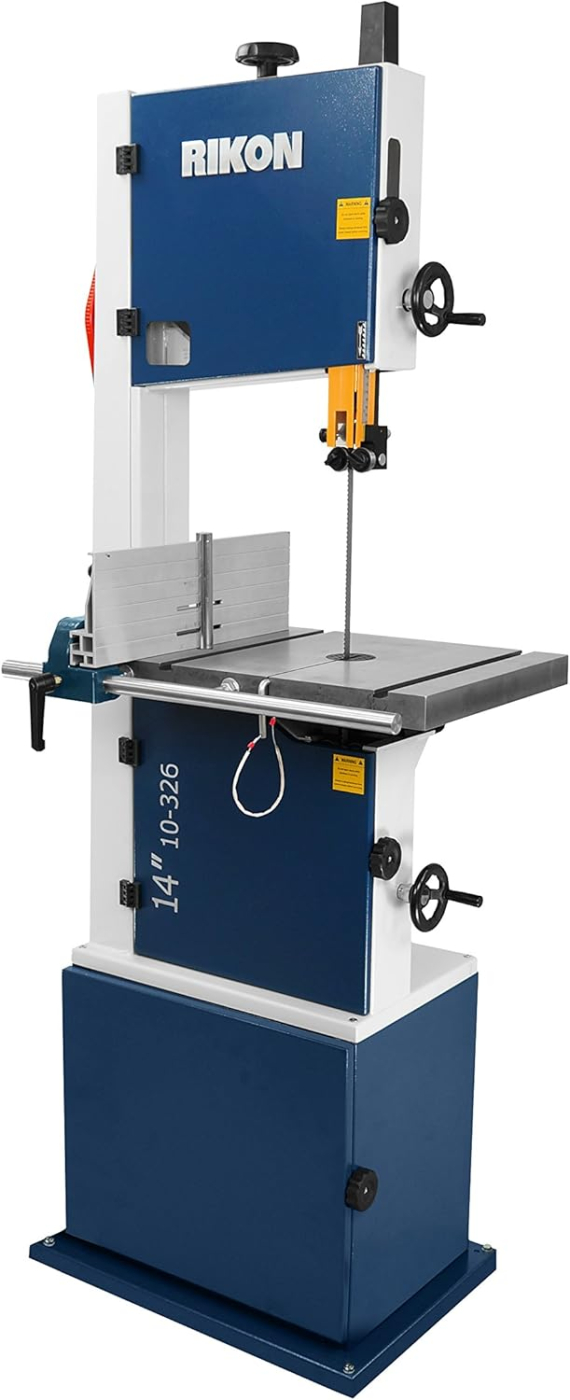
The RIKON10-326 14" Deluxe Bandsaw can cut 13-5/8" wide and 13". It has plenty of power with a dual motor and two blade speeds of 2,950 or 1,445 ft/min. The saw comes with a 111" 5/8" x 6 TPI blade, wrenches, a manual, a closed stand, one rip fence assembly. It also includes blade guides for improved cuts. More specifications: dimensions 30"L x 25"W x 75"H, 115 Volts, 274 Pounds, 1312 watts, metric measurements, corded electric power source
Pros
- Spring loaded, tool-less blade guides
- Quick-adjust rip fence
- 13-inches of resaw capacity
Cons
- Fence is a bit complicated to dial in
Reader's Pick 18" band saw: Powermatic ArmorGlide 18-Inch Woodworking Bandsaw
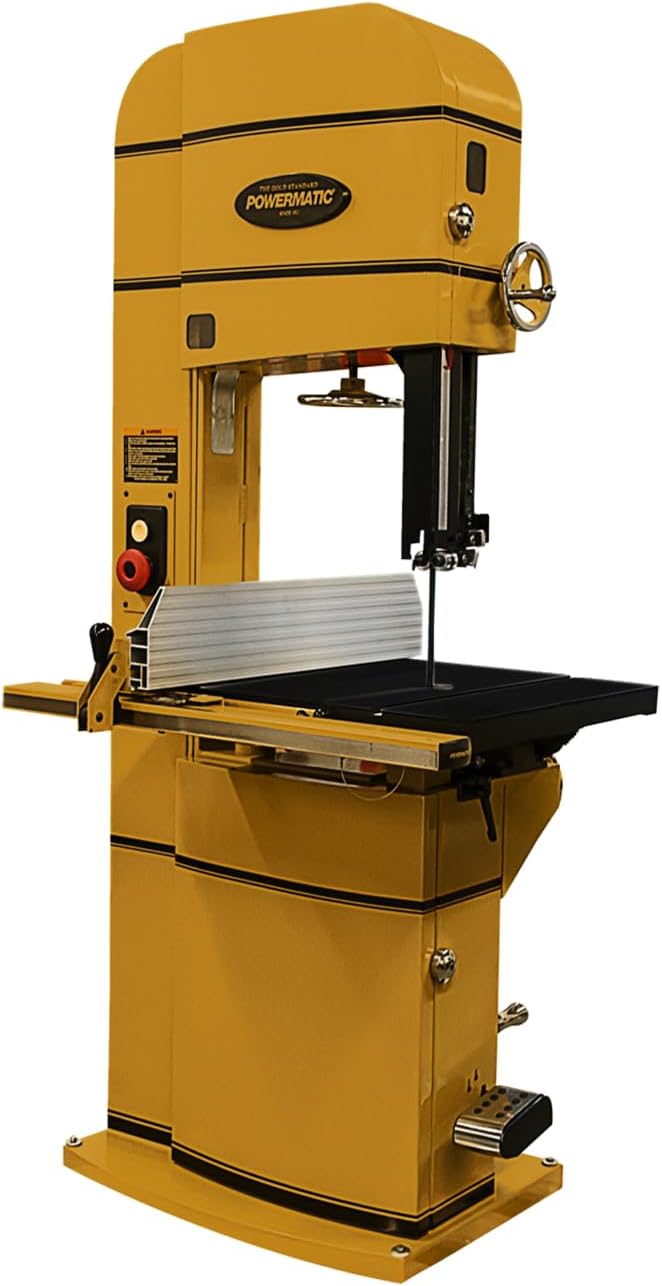
If you're in a professional woodshop environment, you need a saw with professional grade capacity and power. Powermatic has built a reputation over the years as a top choice for woodworking machines, and this band saw is no exception. The Powermatic ArmorGlide 18-Inch Woodworking Bandsaw has a cutting capacity of 18" high and wide. The saw comes with a fence and miter gauge. More specifications: dimensions 39.5"L x 42"W x 81.5"H, 230 Volts, 30 Amps, 840 Pounds, 86574 watts, foot brake, table tilts 45 degrees to right and 10 degrees left, corded electric power source
Pros
- Low-friction, industrial-grade coating on the work surface that is rust resistant.
- 5hp is likely more power than you'll ever need.
Cons
- Limited warranty
The Best Band Saw Buying Guide
What is a band saw?
A band saw is a power tool used primarily in woodworking and metalworking. The blade is a continuous band of toothed metal that rides on two or more wheels and rotates vertically. The narrow blade and adjustable table angle enable it to make curved and irregular cuts. Band saws are commonly used for cutting wood, but with different blade types, they can also cut metal, plastic, and other materials as long as the saw is capable of changing speeds appropriately.
Is it bandsaw or band saw?
The terms bandsaw and band saw are used interchangeably. Officially, neither term seems to be more widely used than the other. In our listings below, we stuck with the term the manufacturer used to describe their saws.
Types of Band Saws
Benchtop Band Saws
Benchtop band saws are compact and designed for smaller workshops or hobbyists needing a versatile cutting tool without much space. They typically have smaller motors and cutting capacities than floor-standing models and are ideal for lighter-duty tasks.
Floor-Standing Band Saws
Floor-standing band saws, on the other hand, are larger and more powerful, making them suitable for professional workshops. They have higher horsepower motors and larger cutting capacities, allowing them to handle thicker and denser materials. They often come with additional features like larger tables, better dust collection systems, and more advanced blade adjustment mechanisms, which are incredibly helpful for woodworkers.
Choosing between benchtop and floor-standing band saws depends on your budget, workshop space, the scale of your projects, and the frequency of use. Hobbyists and those with limited space may opt for a benchtop model, while professionals and dedicated woodworkers typically favor the power and capacity of floor-standing band saws.
Factors to Consider Before Buying a Bandsaw
Power
Motor power determines the saw’s ability to effortlessly handle dense and thick materials. Higher horsepower motors can maintain blade speed and cutting performance even under load, making them suitable for professional workshops. When selecting a band saw based on motor power, consider the types of materials you plan to work with and the intensity of your woodworking projects. For light-duty tasks such as occasional hobbyist projects or cutting softwoods, a band saw with a lower horsepower motor (around 1/4 HP to 1 HP) may suffice. These models are typically more compact and economical.
Consider a band saw with a higher horsepower motor (1.5 HP to 2 HP or more) for heavier-duty tasks like cutting hardwoods or resawing. These models provide increased cutting power and torque, ensuring efficient operation even when tackling tough tasks. They are ideal for professional woodworkers and furniture makers who require high performance and reliability for demanding projects. For quick reference:
- 1/2 to 1 HP: Adequate for light to medium tasks.
- 1.5 to 2 HP: Suitable for heavier cuts and hardwoods.
- 3+ HP: Industrial-grade for continuous heavy use.
Cutting Capacity
The cutting capacity of a band saw is crucial as it determines the size and thickness of the materials you can effectively work with. Two main factors determine this capacity: throat depth and maximum cutting height.
- Throat depth refers to the distance from the blade to the vertical frame of the band saw. A larger throat depth allows you to maneuver larger pieces of wood or other materials through the saw, making it easier to perform intricate cuts and work with broader stock.
- Maximum cutting height or resaw capacity refers to the distance from the table to the upper blade guides when the saw is at its highest position. This measurement indicates the thickest stock the band saw can cut through in a single pass without adjusting the blade or making multiple cuts. Note that the resaw capacity can also be limited by the power of the motor on harder woods.
About band saw blades
Blade Size, Width, and Type
Blade width determines the minimum radius of curves you can cut and the thickness of the materials the saw can handle. Narrow blades, typically 1/8 inch to 1/2 inch wide, are ideal for intricate cuts and tight curves in thinner materials such as plywood or plastics. Wider blades, ranging from 1/2 inch to 1 inch or more, are suitable for straight cuts in thicker materials, offering stability and durability for more substantial stock.
Blade Tooth Type
Tooth configuration refers to the arrangement and shape of the teeth on the band saw blade. Choosing the right tooth type depends on what you’re cutting, the material thickness, and the material you are working with. For example, finer tooth configurations like regular tooth blades are better for smoother cuts in thinner materials, while coarser tooth configurations like skip tooth or hook tooth blades are more suitable for aggressive cutting in thicker materials. Band saw blades are available in various tooth configurations, including regular, skip tooth, hook tooth, and variable pitch.
Regular Tooth Blades: These blades have evenly spaced teeth and a standard gullet size. They are versatile and suitable for general-purpose cutting in a variety of materials, including wood, plastics, and non-ferrous metals. They provide a good balance between cutting speed and finish quality.
Hook Tooth Blades: Hook tooth blades have deeper gullets and fewer teeth per inch than regular tooth blades. This design allows for efficient chip removal and reduced heat buildup during cutting. Hook tooth blades are ideal for cutting thicker materials such as hardwoods and metals, where chip clearance and heat dissipation are crucial for maintaining blade performance.
Skip Tooth Blades: Skip tooth blades have widely spaced teeth with deeper gullets, resulting in faster chip removal and less clogging during cutting. These blades are well-suited for cutting softer materials like wood, plastics, and non-ferrous metals. The skip tooth design helps reduce heat buildup and prolongs blade life by minimizing friction.
Variable Pitch Blades: Variable pitch blades feature teeth with varying distances between them along the length of the blade. This design helps reduce noise and vibration while improving cutting efficiency. Variable pitch blades are versatile and suitable for cutting various materials with varying thicknesses and densities.
People Also Asked
Why invest in a band saw?
Band saws are some of the most advantageous tools there are. They are extremely helpful in cutting straight or curved lines across wood. Since the blade of the saw is thin, it allows for a lot of control over how you cut, allowing you to make curves that are not possible with other tools. With a wider blade, it can make precise straight cuts as well as resaw lumber into thinner stock.
What is the difference between a jigsaw and a band saw?
Band saws have blades that cut in continuous loop motions. Unlike the band saw blades, jigsaw blades move in an up and down motion to make cuts. While they can make similar types of cuts, band saws are generally a more precise, while jigsaws are a more portable handheld alternative.
What cuts can a band saw make?
Band saws cut a variety of styles. They are ideal for curved cuts, crosscuts, resawing, bevel cuts, rip cuts, compound cuts, irregular cuts, and miter cuts. Of course, you will have to be the one to decide what kind of cuts you need to make repeatedly to opt for a band saw.
Which is the perfect size of band saw?
There are different sizes and shapes of band saws available in the market. You can try the one that works best for you. If you are a regular user, or cutting large materials, then you will probably want a saw with a 14 inch throat or more. If you are just a hobbyist or enthusiast who likes to DIY, then a benchtop model will work well enough for you. In other words, the type of band saws you should consider will depend on your needs and requirements.

