We may receive a commission when you use our affiliate links. However, this does not impact our recommendations.

Most repairs to furniture during the construction process are a drag because I am kicking myself for making an error in the first place. Not so when adding wooden keys to a slab tabletop.
Big wood tends to split. And left unchecked, the split can continue to open during the seasonal expansion and contraction cycle. The traditional fix is a wooden key that looks like two dovetails kissing. Or a butterfly. Or a unicorn sparring with its sacred mate.
While I am sure someone has written rules and regulations regarding wooden keys, I have yet to read and obey them. I make mine so they have the same slope as my dovetails, and they are thick enough to reinforce the slab.
How thick? I’m patching a split in some 12/4 oak in this example. My key is about 1/2” thick. Depending on how I feel, I might put a key on the underside as well.
(Note there are non-traditional ways to keep a split in check. Try countertop connectors – sometimes called “dog bones” in the trade – or pocket-hole screws that span the split. These metallic fixes have the advantage of being adjustable. I know, I know, fetch your torch and pitchforks.)
Saw out the key using a stout wood. I used a scrap of bog oak for this repair. Clean up the sawblade marks with a chisel and ensure all the key’s edges are 90° to the faces.
Clamp the key across the work with the narrow neck right over the split. Then trace the shape of the key using a marking knife and a sharp pencil. Remove the key.

Root out the waste. I like to bore a few holes with an auger to get the process started. Then I chop out the rest of the waste with a chisel. Stay away from the knife lines until the end. Resharpen your chisel and pare to the knife lines. This mortise took about 15 minutes to bore and chop.

Check the walls of the mortise with a small square. They should be 90° or slightly, slightly undercut.
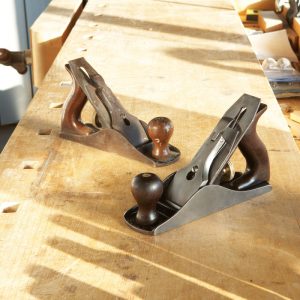
Then put some glue in the mortise and tap the key in. Plane it flush. It shouldn’t require clamping (but clamp it if it does).

I try to keep the process simple. There are lots of variants on this procedure – you can bevel the edges of the key to create a cork effect, but you better practice that first before jumping in.

As you can see, the fit above isn’t perfect. One of my knife lines got a little rounded over. And a tiny speck of grain popped out. The slab can shift around when you insert the key. However, after some planing, some finish and a little black wax it will look seamless.
— Christopher Schwarz