We may receive a commission when you use our affiliate links. However, this does not impact our recommendations.
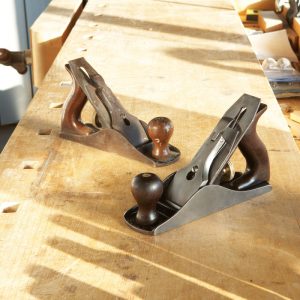
In my mind, I only have two choices. I either leave the line when I cross cut saw, then plane the end grain down to it, or saw to the line and deal with my mistakes.
In my experience its fairly easy to hold the line when sawing. You just lay the saw down into the kerf remember? The real trick to sawing is holding square. The old trick to using the reflection of the board’s edge in the saw doesn’t really help. I often start square and end up a few or even several degrees off at the other end of a long cut. So how do you fix that if you’ve gone under the good side? You can plane it square, but you’re going to lose the line. Which is worse? It’s a problem.
So it seems a better approach is to leave the line when you saw and then plane down to it. This is a plan for success since it ensures you’ll always end up with what you want. But its also a plan for failure since it guarantees you’ll have to plane end grain on every board.
In corporate America and the US Military, they use the Meyers-Briggs personality profile test to help fit personnel into jobs or training suited to their natural skills and tendencies. In 18th c craftshops they may well have used the existence and use of shooting boards to separate the aggressive from the timid. Clearly, sawing straight and square is best. Flipping the board over can help. But when you are looking $14/bdft mahogany in the face, what will you do? I shoot for winners and deal with my mistakes as they come. And I’ve made doosies. I look at planing end grain as my punishment for sawing poorly.
In my latest project, the upper case for my standing desk, I planed no end grain, pared no dovetails. All of my saw cuts were, not necessarily perfect, but acceptable. This is the reward that awaits the aggressive.