We may receive a commission when you use our affiliate links. However, this does not impact our recommendations.

I leave for North Carolina this week to shoot two episodes of “The Woodwright’s Shop” with Roy Underhill then teach a three-day class on handsawing at Underhill’s little Utopia of a woodworking school in Pittsboro, N.C.
One of the shows will be on English handsawing (no on-screen French-sawing DIY vasectomies are planned) and the other show will be about the simple toolkit of a joiner, circa 1839.
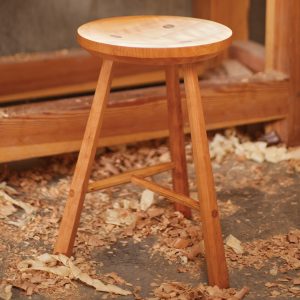
To prepare for the class and show, I built a new sawbench this weekend and improved the design a bit to use less material, I used a wood species that is easier to deal with when working with hand tools and I tweaked the design to make the sawbench ideal for those who do a lot of ripping on their sawbenches.
Here’s why I made these changes:
1. Less Material: Previous generations of my sawbenches used 2×8 material. This allowed me to have the top fairly wide (just under 7″) and to rip all the components out of the 2×8 and increase the chances that I’d end up with quartersawn stock. I switched to 2×6 material for this new generation, which reduces the cost of the project a bit (always a good thing). It also makes the top a little narrower, which hasn’t been a problem yet. But it does mean I need to be more careful in selecting my stock because there’s little waste when ripping up the 2×6.
2. New Species: By switching to 2×6 material, that meant I could use Canadian white pine instead of Douglas fir or Southern Yellow pine. I usually prefer yellow pine for this project because the stuff is durable. But when I teach students about sawing and we’re cutting yellow pine, they struggle. The different densities of the earlywood and latewood give them fits. By switching to white pine, I can further reduce the cost of the bench and make all the joints easier to cut. And white pine is plenty durable for a sawbench.
3. Design Change: I now have one long stretcher down the middle of the sawbench instead of two long stretchers attached to the outside of the legs. This does a few things. It reduces cost and weight. It gives us another type of joint to cut. And it makes the sawbench easier to use for ripping. On previous generations of sawbenches, students would sometimes score the long stretchers with their ripsaws, especially when sawing with the tool vertical. With this new design, you can’t nick the lower stretcher unless you are sawing wrong.
And one last change: The parts are fastened together using 6d cut nails instead of screws. The cut nails just look cooler.
After I get back from The Woodwright’s School, I’ll have a four weeks in the office and the shop before my next trip. That means I’ll finally be able to give you the answer to the e-mail you sent me in May.
– Christopher Schwarz
Other Interesting Links on Hand Tools for You
– Read an interview with Roy Underhill about his most recent book. http://blog.woodworking-magazine.com/blog/An+Interview+With+Roy+Underhill.aspx
– Read my review of Roy’s book “The Woodwright’s Guide.” http://blog.woodworking-magazine.com/blog/Review+New+Book+From+Roy+Underhill.aspx
– Have you heard about our reprint of the book “Exercises in Wood-Working”? It’s a great lesson-by-lesson way to get familiar with hand tools. And I host some short videos actually performing the exercises. Fun! Read about it in our store.
– Like the PBS show “The Woodwright’s Shop”? You can watch episodes for free here. http://www.pbs.org/woodwrightsshop/
– Got a drool bib handy? Go here: www.maison-de-l-outil.com.