We may receive a commission when you use our affiliate links. However, this does not impact our recommendations.
 From time to time I hear someone comment about a woodworking practice that runs totally contrary to what I’ve been taught. One of these is what kind of wood surface yields the strongest joint when using wood glues, typically white or yellow glue, but also hide glue.
This came up a few weeks ago. And while I thought I was right, that the best surface is smooth, I thought I’d get to the bottom of the question. I mean, maybe I was wrong. So I went to the folks who know a lot about this, Franklin International, makers of the Tite-Bond and lots of other adhesives. I received the following from Bob Behnke, the company’s Senior Technical Specialist. There’s great information here that every woodworker must know. And by the way, the section on Franklin’s web site on woodworking glues is a great resource for woodworkers. You should check it out.
Hi Steve,
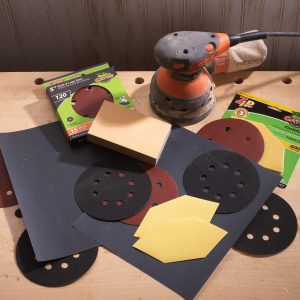
Our work has shown that a smooth surface will always have higher strength than a rough surface. Two-hundred grit or higher sanding to get flat or tight-fitting joints works well.
Wood glues work by attaching to cellulose on the wood and the smoother (tighter) the joint, the less adhesive is needed to bond the surfaces. Less adhesive gives fewer areas of imperfections (bubbles, skips, dust and gaps) where stress can accumulate and cause glue line failure. Also, wood glues tend to be around 50% solids and therefore shrink when they dry. If the rough surface is too “gappy,” as the adhesive dries and shrinks, it will pull away from one surface or the other leaving gaps in the glue line, which again will concentrate force when the joint is stressed. This is why wood glues need to be clamped. Clamping keeps the surfaces in contact as the glue shrinks and dries.
A note of caution on smooth surfaces: Burnished areas may be smooth, but will not bond. Burnishing causes the cellulose to change chemical characteristics and thus not bond to the polyvinyl alcohol portion of the wood glue. This can be tested by putting a drop of water on the surface of the wood, if it doesn’t soak in, the surface is burnished or sealed and should be sanded until cleaned of the burnishing.
For hammer veneering, you can use either hot or liquid hide glue. I have read that roughing the surface of the substrate and veneer gives better strength. But our work shows that too much roughing of the surface can cause loose fibers and fiber tear which can weaken the bond. As above, the adhesive bonds to the cellulose so a roughed surface is not necessary, but as long as it doesn’t damage the wood surface to be bonded, it will produce good results on veneers.
Bob Behnke
Sr. Technical Specialist
Guess that settles it. And thanks, Bob.
Want to know more on gluing and clamping? Read a fascinating blog post by executive editor Robert Lang based on an experiment gluing a mortise and tenon joint. You may also want “Glue and Clamps, the Missing Shop Manual,” a 104-page paperback in our store for just $9.95.
Here are some supplies and tools we find essential in our everyday work around the shop. We may receive a commission from sales referred by our links; however, we have carefully selected these products for their usefulness and quality.