We may receive a commission when you use our affiliate links. However, this does not impact our recommendations.
 When my first book, “Workbenches: From Design & Theory to Construction & Use,” was released, I played a game that many first-time authors play. I looked for my book on the shelves of any bookstore I visited.
After a few years I gave up. I’ve never seen the book for sale anywhere except online. But I do have something else that I’ve decided is better: Hundreds (maybe thousands) of photos of workbenches that people built using the advice in the book.
Like many woodworkers, I fantasized about a piece of my furniture ending up on display in a museum. That, I thought, would mean that I am an able designer and craftsman – and that I have succeeded as a woodworker.
But a funny thing happened. I visit a lot of museums to see both the art and the furniture collections. A few years ago I got to visit the Museum of Fine Arts in Boston to look at its collection of early American furniture, which is mostly behind glass. To my side was the curator of the collection, and when I asked him about how a piece was constructed or what a drawer looked like, he answered:
I don’t know. I’ve never been permitted to touch this piece.
At that moment I began to feel sorry for all the furniture pieces in all the museums. Like the Velveteen Rabbit, it wasn’t “real” furniture anymore because it wasn’t being touched, sat on or used. Sure, it was being preserved, which has value, but careful use and conservation can do the same thing (with most pieces) and allow the piece to maintain its dignity as a working piece.
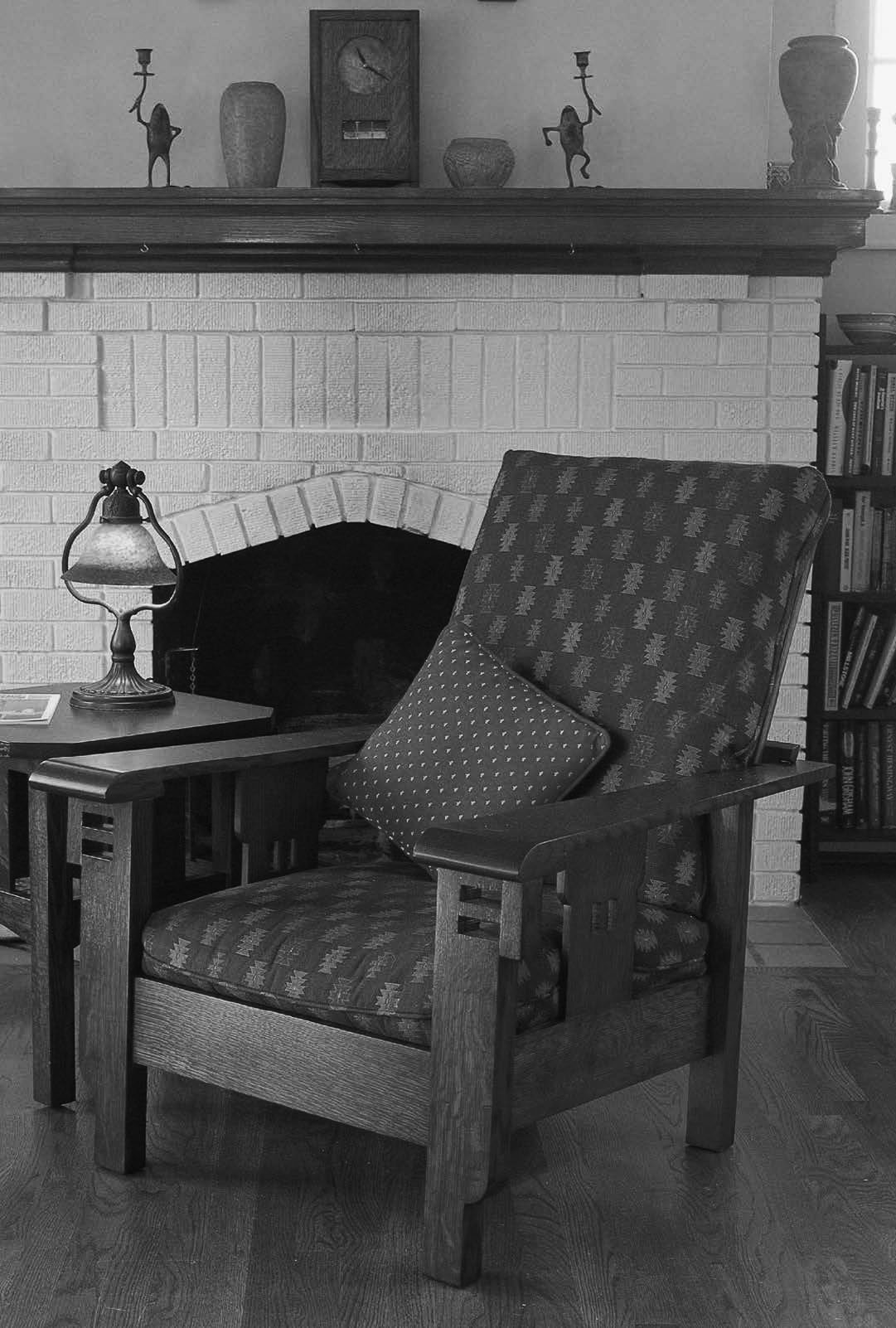
Now, my greatest accomplishment as a furniture maker happens when I visit the home of a customer or friend who owns one of my pieces. One of my early commercial pieces – a Morris chair from the Shop of the Crafters shown in the above photo – is in several homes in Cincinnati, Lexington and Texas. When I visited the Lexington home once, I saw my chair sitting in the middle of the living room and it took me aback. It was worn. Scratched in places. And draped with the morning paper.
I couldn’t have been happier. That was when I knew I was an able builder.
— Christopher Schwarz