We may receive a commission when you use our affiliate links. However, this does not impact our recommendations.

When people injure themselves in the shop, their first reaction is to grab the wound and refuse to look. Sadly, this is the same attitude many woodworkers take with the squareness of their components: They refuse to look and hope things will work out.
While there are lots of areas of woodworking where squareness doesn’t matter (stick chairs, for one), if you are going to build rectilinear boxes and hope to fit rectilinear boxes and doors inside your boxes, you have to be willing to probe every component with a try square and deal with the results.
Today I’m building a complex and mechanical table base using lots of machine operations. But before I set up my mortiser to cut the 60-odd mortises, I checked every wooden component to ensure their ends and edges were square.
I didn’t always do this. When I began woodworking in the early ‘90s, I trusted my machines and jigs to keep things square. If the machine could cut a test piece dead square, that was good enough. If you’ve been woodworking for a while, you know this is folly.
Workpieces can slip slightly during the cut (yes, even with a stop block). A bit of dust trapped between your work and your machine will throw things off in crazy ways. In other words, it’s not square unless the square says it is square.

Which brings me to my squares. While I have a combination square that I use for a lot of tasks, I don’t trust it enough to pass judgment on components and joints. For that I have a fixed-blade try square (mine is from Chris Vesper in Australia) that has been infallible and is treated like an honored guest (i.e. don’t drop your guests on the floor).
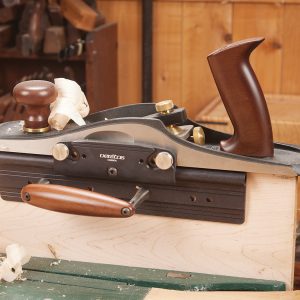
After I check each part, I’ll correct it if necessary. I prefer to use a shooting board, though any sharp plane can do the trick. After I correct a part I then compare it other parts that are supposed to be the same length to ensure I’m not making things worse.
In the end, all this fussing is worth it when building complex assemblies. Yes, it slows things down, but it also reduces the number of rhombus boxes coming out of your shop.
— Christopher Schwarz
Here are some supplies and tools we find essential in our everyday work around the shop. We may receive a commission from sales referred by our links; however, we have carefully selected these products for their usefulness and quality.