We may receive a commission when you use our affiliate links. However, this does not impact our recommendations.

Popular brands of wooden boat varnishes bought at a marina.
We’re entering mid-summer and you may be thinking of applying a clear finish to some project that will be exposed to sunlight outside. What finish should you use? Be careful. All finishes marketed for exterior surfaces aren’t the same, no matter the claims of manufacturers.
The distinction in exterior clear finishes is whether they contain UV-resistant additives, called “UV inhibitors” or “UV absorbers.” And whether they contain enough of these additives to be effective.
Exterior finishes that contain these additives are much more expensive than those that don’t, but they are the only ones that hold up in sunlight. Exterior finishes that don’t contain these UV absorbers still work well in shaded areas.
Exterior finishes generally go by the name “spar,” as in “spar varnish.” Sometimes, a distinction for UV resistance can be made between common spar finishes (without UV inhibitors) and “marine” or “boat” finishes (with UV inhibitors). But there is no industry agreement on the naming, so you’re left with price and where you buy the product being the best indication of which you’re getting.
The spar finishes you buy at home centers and ordinary paint stores generally either don’t contain the absorbers or contain too little to be effective against sunlight. To find exterior clear finishes that contain an adequate amount of the UV-resistant additives, you usually have to go to a marina in a coastal area, or find one of these marinas online and purchase by mail order.

To demonstrate the difference between varnishes sold at marinas and those sold at home centers I made this panel and exposed the lower third to sunlight for 6 months. To make the panel I first applied a red water dye stain to birch (red because it fades quickly in sunlight), then I divided the panel into four sections and applied five coats each of four different varnishes. At the left, a UV-resistant varnish sold at marinas; in the middle, two common spar varnishes with claims to UV resistance sold at home centers; and, at the right, an indoor varnish with no claim to UV resistance. You can see that the varnish from the marina was fairly effective at blocking UV light. But the middle two varnishes were hardly better than the indoor varnish, despite claims to the contrary from the manufacturers.
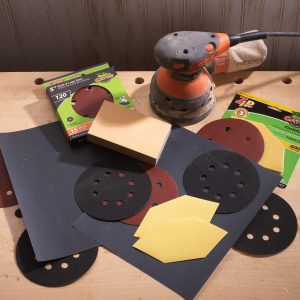
Even with a finish with good UV resistance, if the finish is exposed to a lot of sunlight, you still need to maintain it a lot more than you are used to with a finish indoors. The sun will dull the finish, then begin breaking it down. This happens on the surface first, of course, so the easiest procedure to follow is to sand through the damage, then apply another coat or two of the finish. You don’t necessarily need to strip the finish all the way to the wood. It’s less work to keep up the finish than to replace it.
This is the procedure most wooden boat owners use.
– Bob Flexner